

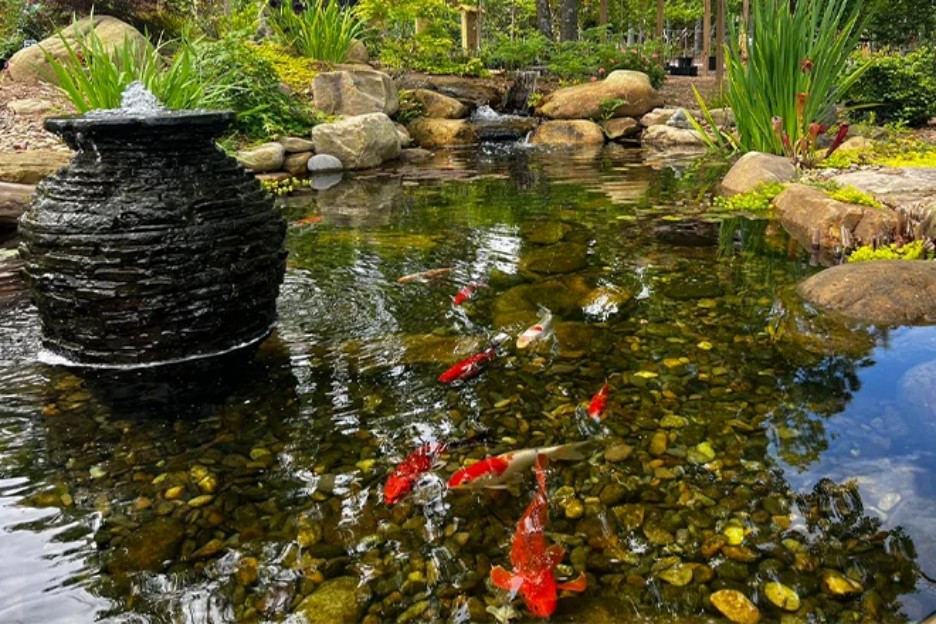
A filtration system is one of the most important components of a koi pond. Without proper koi pond filters, the water can quickly become unhealthy for fish. In simple terms, a pond without a filter is similar to living in a room with no bathroom—waste builds up quickly and creates an unhealthy environment.
Koi spend their entire lives in the pond. They eat, sleep, and produce waste in the same water they live in. Without effective koi pond filters, leftover food, fish waste, and other debris accumulate. Over time, this buildup leads to poor water quality and harmful toxins.
This is why every koi pond needs properly sized and well-designed koi pond filters. A good filtration system helps maintain clean water, supports fish health, and creates a balanced aquatic environment.
Why a Koi Pond Filtration System Is Essential
Koi ponds are closed environments. Unlike natural lakes or rivers where water constantly moves and refreshes itself, pond water remains in the same space. This means waste and pollutants can quickly accumulate.
Fish waste, uneaten food, plant debris, and organic matter can release harmful substances into the water. If these are not removed or treated, they can harm fish and disrupt the pond’s ecosystem.
A filtration system helps by:
- Removing solid waste and debris
- Breaking down harmful toxins
- Maintaining water clarity
- Supporting beneficial bacteria
- Creating a healthier habitat for koi
Even if pond water looks clear, it may still contain harmful substances. This is why filtration is necessary for both water clarity and water quality.
Mechanical vs Biological Filtration
When discussing pond filtration, two main types are commonly used: mechanical filtration and biological filtration. Each plays a different role in keeping pond water clean and safe.
Mechanical Filtration
Mechanical filtration removes solid waste and debris from the water. This includes fish waste, uneaten food, leaves, and other particles.
Think of mechanical filtration as similar to vacuuming a room. It physically removes visible dirt and debris, making the space look clean.
In a pond, mechanical filters capture particles using screens, pads, brushes, or other filtration materials. This helps prevent waste from accumulating in the water.
However, mechanical filtration alone cannot remove dissolved toxins such as ammonia. While the water may appear clear, harmful substances may still be present.
Biological Filtration
Biological filtration focuses on removing harmful chemicals from the water using beneficial bacteria.
Fish waste releases ammonia, which is toxic to koi. In a biological filter, beneficial bacteria break down ammonia and convert it into less harmful compounds through the nitrogen cycle.
These bacteria grow on special filter media that provide large surface areas for them to live and reproduce. Over time, a stable bacterial colony develops and helps maintain healthy water conditions.
Because it removes toxic substances rather than just visible debris, biological filtration is essential for long-term pond health.
Common Types of Koi Pond Filter Systems
There are many types of filtration systems used in koi ponds. Most ponds use a combination of mechanical and biological filtration for the best results.
Screen-Based Mechanical Filters
Some mechanical filters use fine screens to separate solid waste from the water. These screens trap particles while allowing clean water to pass through.
This type of filtration is very effective at removing small debris and helps keep pond water clear.
Pressurized Bead Filters
Pressurized bead filters contain small beads that trap waste particles as water flows through the system. They are often designed with a backwash feature that allows accumulated debris to be flushed out easily.
The beads also provide surface area where beneficial bacteria can grow, allowing the system to perform both mechanical and biological filtration.
Biological Media Filters
Biological filters use specialized media designed to support beneficial bacteria growth. The purpose of this media is not to trap debris but to provide large surface areas where bacteria can live.
Common types of biological media include:
- Filter mats
- Bio balls
- Filter brushes
- Porous ceramic media
These materials allow water and oxygen to circulate freely, which helps bacteria break down harmful toxins efficiently.
How to Choose the Right Koi Pond Filter System
Choosing the right filtration system depends on several factors, including pond size, fish population, and maintenance preferences.
For most koi ponds, using both mechanical and biological filtration together is recommended. Mechanical filtration removes solid waste, while biological filtration detoxifies the water.
If you can only install one type of filtration, biological filtration should be prioritized because it addresses harmful toxins that can affect fish health.
A well-balanced filtration system helps maintain stable water conditions and supports a thriving pond ecosystem.
Proper Filter Sizing for a Koi Pond
One of the most common mistakes pond owners make is installing a filter that is too small.
A good rule of thumb is to choose a filter rated for at least twice the size of your pond. For example, if your pond holds 1,000 gallons of water, the filtration system should ideally be designed for 2,000 gallons.
This ensures the system can handle the amount of waste produced by koi, which tend to generate significant waste compared to other fish species.
Oversizing a filter is usually beneficial because it improves water quality and reduces maintenance.
The Importance of Aeration in Koi Ponds
Aeration is another critical factor in maintaining a healthy pond environment.
Beneficial bacteria used in biological filtration require oxygen to survive and function properly. Without adequate oxygen, these bacteria cannot effectively break down toxins.
Adding aeration devices such as air pumps or diffusers increases oxygen levels in the water. This supports bacterial activity and improves overall water quality.
Even ponds with waterfalls or moving water may still benefit from additional aeration, especially in ponds with high fish populations.
Creating a Healthy and Balanced Koi Pond
A well-designed koi pond filtration system combines mechanical filtration, biological filtration, and proper aeration.
Together, these elements help remove waste, break down toxins, and maintain clear, healthy water for fish.
By selecting the right filtration system, sizing it correctly, and ensuring adequate oxygen levels, pond owners can create a stable and thriving environment where koi can live comfortably and grow for many years.